Key Takeaways
- Digital marketing gives small businesses access to the same channels as large corporations, at a fraction of the cost.
- Over 5.5 billion people use the internet worldwide — your customers are already online.
- Only 17% of small businesses currently use SEO, making it one of the biggest untapped growth channels.
- Digital marketing results are fully measurable, which means every rand you spend is traceable.
- From brand awareness to direct lead generation, digital marketing covers the full customer journey.
Small businesses have always faced the same core challenge: limited budget, unlimited competition. Traditional advertising — TV slots, print ads, billboards — was expensive, difficult to measure, and largely inaccessible to businesses without a significant marketing budget.
Digital marketing changed that equation entirely.
Whether your business has five employees or fifty, a proper digital marketing strategy puts you on the same playing field as companies ten times your size. In this guide, we break down the 9 most important benefits of digital marketing for small businesses — and why getting started in 2026 is no longer optional.
What is Digital Marketing?
Digital marketing refers to all marketing activity that happens online. It covers search engine optimisation (SEO), social media marketing, email campaigns, paid advertising (Google Ads, Meta Ads), content marketing, and more.
Unlike traditional marketing, digital marketing is:
- Targeted — you reach specific audiences based on location, age, interests, and behaviour.
- Measurable — every click, impression, and conversion is tracked.
- Scalable — you can start small and grow your spend as your results improve.
Why Small Businesses Need Digital Marketing in 2026
The numbers tell a clear story:
- 5.5 billion people use the internet globally — your customers are online. (Quimby Digital)
- 63% of small businesses plan to increase their marketing budgets in the next year. (Simple Texting via Sixth City Marketing)
- 47% of small businesses name marketing as their number-one growth strategy. (WebFX via Sixth City Marketing)
- 73% of small businesses are not confident their current marketing strategy is working. (Constant Contact via Sixth City Marketing)
The gap between businesses with a solid digital strategy and those without is widening every year. Here is what digital marketing actually delivers.
9 Key Benefits of Digital Marketing for Small Businesses
1. Increased Visibility and Brand Awareness
When a potential customer searches for your type of business, they need to find you. Digital marketing — particularly SEO and Google Business optimisation — puts your brand in front of people at exactly the right moment.
Here is what increased online visibility looks like in practice:
- Your website ranks on page one of Google for local service searches.
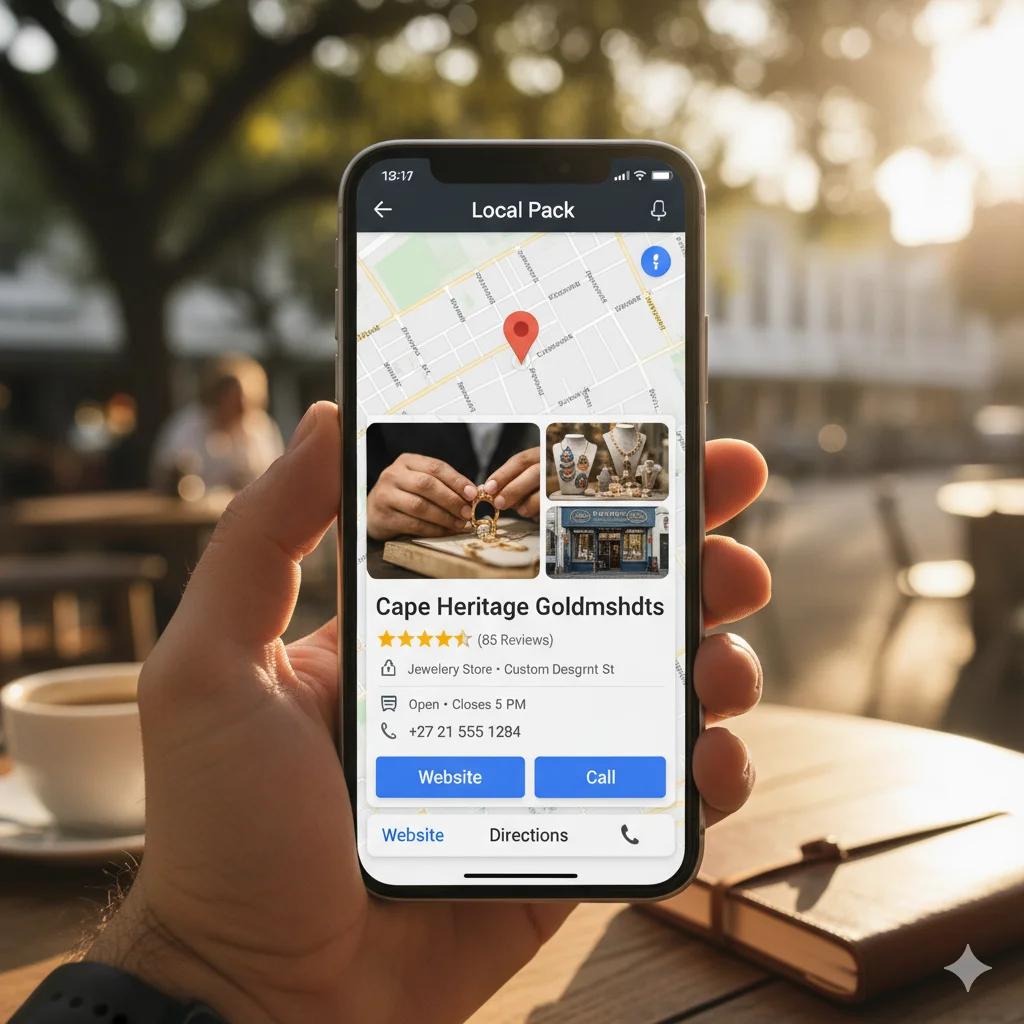
- Your Google Business profile shows up in map results with reviews and contact details.
- Your social media profiles appear when people search your brand name.
- Paid ads serve your business to people who have already shown interest in your services.
- Retargeting ads bring back visitors who left your site without enquiring.
The result is a brand that is consistently visible across multiple touchpoints — search, social, email, and paid channels — so potential customers encounter your business repeatedly before they are ready to buy.
2. Cost-Effective Marketing on Any Budget
Digital marketing is one of the most affordable ways to reach a targeted audience. A Facebook ad campaign can start from R50 per day. A well-optimised blog post generates traffic for years without ongoing ad spend. Email marketing delivers some of the highest returns on investment of any marketing channel.
Compare this to traditional advertising:
| Channel | Cost | Targeting | Measurable? |
|---|---|---|---|
| TV Ad (30 sec) | R50,000+ | Broad | No |
| Billboard | R15,000+/month | Geographic only | No |
| Google Search Ad | Your budget | Precise | Yes |
| SEO Blog Post | Once-off content cost | Organic search | Yes |
| Email Campaign | R500–R2,000/month | Subscriber list | Yes |
For a small business with a limited budget, digital marketing offers the best cost-per-lead of any marketing method available.
3. Precise Audience Targeting
One of the biggest advantages digital marketing has over traditional channels is the ability to target exactly the right person at exactly the right time.
Digital targeting options include:
- Geographic targeting — show ads only to people in Johannesburg, Cape Town, or a specific suburb.
- Demographic targeting — age, gender, income bracket, job title.
- Interest-based targeting — people who follow competitors, visit related websites, or search specific keywords.
- Behavioural targeting — people who have visited your website, added a product to their cart, or interacted with your social content.
- Lookalike audiences — find new customers who share traits with your existing best customers.
This level of precision means your marketing budget works harder. You are not paying to reach people who will never buy from you.
4. Real-Time Customer Engagement
Traditional marketing is one-directional. Digital marketing is a two-way conversation.
Small businesses can engage with customers in real time through:
- Responding to comments and messages on social media.
- Running polls and Q&A sessions on Instagram Stories.
- Replying to Google reviews (positive and negative).
- Live chat and chatbots on your website for instant enquiries.
- Email sequences that respond automatically based on customer actions.
This level of engagement builds trust and loyalty. A customer who gets a quick, personal response from your business is far more likely to refer others and return. In South Africa's small business environment, this personalised touch is a significant competitive advantage.
5. Measurable Results and Data-Driven Decisions
With traditional marketing, it is nearly impossible to know which billboard or radio ad actually drove a sale. Digital marketing removes that guesswork entirely.
Key metrics you can track in real time:
- Website traffic — how many people visited, from which channel, and for how long.
- Conversion rate — what percentage of visitors completed a desired action (enquiry, purchase, download).
- Cost per lead — exactly how much each new lead cost you to acquire.
- Email open and click-through rates — how engaged your subscriber list is.
- Return on ad spend (ROAS) — the revenue generated for every rand spent on advertising.
- Keyword rankings — where your website appears in Google search results over time.
This data allows you to double down on what works and cut what does not — an advantage no traditional marketing channel can match.
6. Compete With Larger Businesses
For the first time in marketing history, a well-executed digital strategy allows a small business to outrank, outperform, and out-engage a much larger competitor.
A small business can compete through:
- SEO — a well-optimised website can rank above a larger competitor if the content is more relevant and authoritative.
- Content marketing — a consistent blog that answers customer questions builds long-term organic traffic without paid spend.
- Social media — a small, authentic brand with genuine community engagement often outperforms large corporate accounts.
- Niche targeting — small businesses can focus on specific local or niche audiences that larger national brands overlook.
- Speed and agility — small businesses can test, adapt, and publish new campaigns faster than a corporate marketing team.
Only 17% of small businesses currently use SEO — meaning there is a significant window of opportunity for those willing to invest.
7. Build Brand Authority and Trust
Consumers research businesses before they buy. According to multiple studies, most buyers read online reviews and visit a company website before making a purchasing decision.
Digital marketing builds brand authority through:
- Google reviews and ratings — social proof that your business delivers on its promises.
- SEO content — in-depth blog posts and guides that demonstrate expertise in your field.
- Social proof — case studies, testimonials, and before-and-after results shared on social media.
- Consistent branding — a professional, cohesive presence across your website, social profiles, and email templates.
- E-E-A-T signals — Experience, Expertise, Authoritativeness, and Trustworthiness signals that Google uses to rank your content higher in search results.
A small business that consistently produces helpful, accurate content earns trust with both its audience and search engines — and that trust compounds over time.
8. Drive More Leads and Sales
At the end of the day, the goal of marketing is to generate revenue. Digital marketing is built for conversion.
Specific tactics that drive measurable lead generation and sales for small businesses:
- Landing pages with clear calls-to-action (CTAs) that convert visitors into enquiries.
- Google Search Ads that capture high-intent buyers actively searching for your product or service.
- Email nurture sequences that move prospects from interest to purchase.
- Retargeting campaigns that re-engage visitors who did not convert on the first visit.
- Social media shopping features (Instagram, Facebook) that reduce friction in the purchase journey.
- Lead magnets — free guides, checklists, or consultations that capture contact details for follow-up.
The advantage of digital lead generation is that every touchpoint is tracked. You know which channel, ad, or page produced each lead — so you can scale what works.
9. Long-Term Growth Through SEO and Content
Unlike paid advertising, which stops the moment you stop spending, SEO and content marketing are long-term assets.
A blog post that ranks on page one of Google generates traffic every day without additional ad spend. A well-optimised website attracts leads 24 hours a day, 7 days a week, even while you sleep.
The compounding benefits of a long-term content and SEO strategy include:
- Sustained organic traffic that grows month over month.
- Lower cost per lead over time as organic results reduce dependence on paid ads.
- Authority building — the longer your content exists and earns backlinks, the higher it ranks.
- AI search visibility — with AI-powered search (Google SGE and similar), businesses with strong E-E-A-T content are cited more frequently in AI-generated answers.
- Evergreen content — a single, well-researched article can generate enquiries for years.
For small businesses with limited budgets, SEO represents the highest long-term ROI of any digital channel.
How to Get Started With Digital Marketing as a Small Business
Starting can feel overwhelming, but the most effective approach is to build one channel well before expanding to others.
A recommended starting sequence for small businesses:
- Build a fast, professional website — your website is the foundation of all digital marketing. A slow or outdated site undermines every other channel.
- Claim and optimise your Google Business profile — free, high-impact, and essential for local visibility.
- Start with SEO — publish content that answers the questions your ideal customers are already searching for.
- Choose one social media channel — focus on where your audience actually spends time, not where you feel most comfortable.
- Set up email capture — even a small list of engaged subscribers is a powerful marketing asset.
- Run targeted paid ads — once you have a converting website, scale with Google Ads or Meta Ads.
At Sarlie Digital, we help South African businesses implement exactly this kind of full-funnel digital strategy — from high-performance website development to SEO, content, and paid advertising. Explore our digital marketing services or get in touch to discuss what a growth strategy looks like for your business.
Frequently Asked Questions
What is the most cost-effective digital marketing channel for a small business?
SEO and content marketing typically deliver the best long-term cost-per-lead for small businesses. While results take 3-6 months to build, the traffic generated is free and compounds over time. For immediate leads, Google Search Ads targeting high-intent keywords offers strong ROI because you only pay when someone clicks.
How much should a small business spend on digital marketing?
A common benchmark is 7-10% of gross revenue for businesses in growth mode. However, small businesses can see meaningful results with a focused strategy starting from R5,000-R10,000 per month, depending on their industry and goals. The key is choosing the right channel for your objective, not spreading a small budget across every platform.
How long does it take to see results from digital marketing?
Paid advertising (Google Ads, Meta Ads) can produce leads within days of launching. SEO typically takes 3-6 months to produce significant organic ranking improvements. Email marketing and social media build momentum over 6-12 months. The businesses that see the best results treat digital marketing as a long-term investment rather than a quick fix.
Can a small business do digital marketing without an agency?
Yes — many small business owners manage basic social media, email, and Google Business themselves. However, technical SEO, paid advertising, and website performance optimisation typically require specialist knowledge to execute profitably. The risk of running ads without experience is spending budget without generating returns.
What is the difference between digital marketing and social media marketing?
Social media marketing is one component of digital marketing. Digital marketing also includes SEO, email marketing, paid search ads, content marketing, and website conversion optimisation. A strong digital marketing strategy uses multiple channels together rather than relying on social media alone.
Final Thoughts
The benefits of digital marketing for small businesses go far beyond just having a presence online. Done well, digital marketing is the most measurable, targeted, and scalable growth system a small business can build.
The businesses that will dominate their local markets in 2026 and beyond are those that treat digital marketing as a core business function rather than an afterthought.
Whether you are starting from scratch or looking to improve an existing strategy, the best time to invest in digital marketing is today.
Contact Sarlie Digital to find out how we can build a high-performance digital marketing strategy for your business.